
You can teach the standards, finish the units, and build in review time, and still have students feel caught off guard by a state science assessment.
That is because NGSS assessments are not just asking students to remember what they learned. They are asking students to use what they know in a new situation.
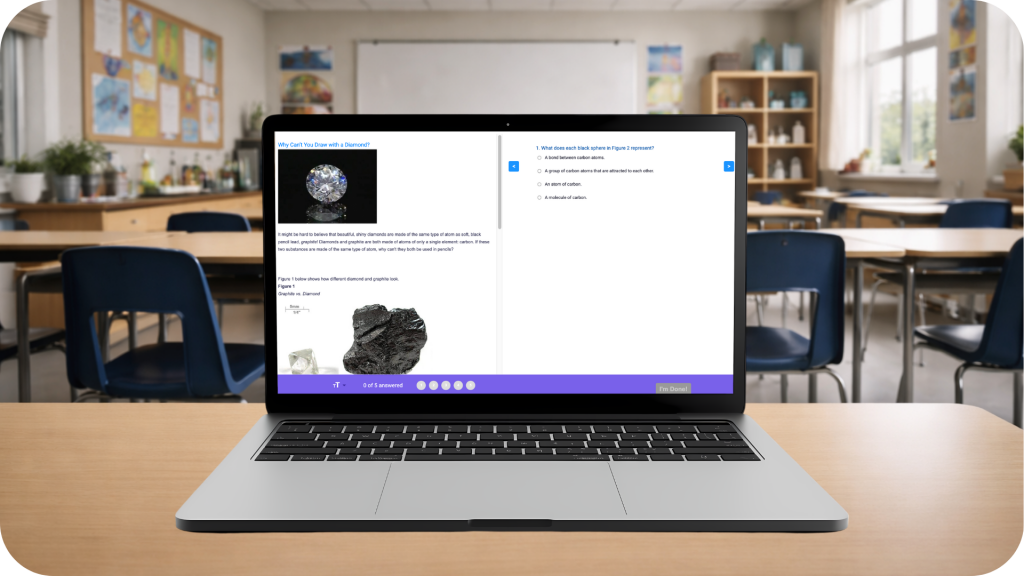
On a state NGSS assessment, students may need to study a model, read a short scenario, look at data, or make sense of a phenomenon they have never seen before. Then they have to apply their science knowledge, reasoning, and conceptual thinking to figure out what is going on.
So even when students know the content, they may still feel unsure if they have not practiced that kind of transfer.
Here is the shift in simple terms:

This matters because students can feel successful with familiar practice, but struggle when the context changes. The issue is not always the science itself. Sometimes it is the shift from familiar examples to unfamiliar ones.
That is why last-minute test prep can only do so much.
Reviewing vocabulary, revisiting content, and practicing more questions can help. But if students are only seeing novel phenomena right before the test, the thinking can still feel unfamiliar. A new phenomenon should not feel like a curveball on test day. It should feel normal.
That is why the strongest preparation happens all year long.
When students regularly work through new phenomena, explain what they notice, use evidence to support their thinking, and apply learning in unfamiliar contexts, they build more than content knowledge. They build confidence and flexibility. They begin to see science as more than getting the right answer. It becomes the work of making sense of something new.
By the time testing season arrives, students should not be thinking, “Wait, we never did anything like this.”
Instead, the goal is for them to think, “I know how to approach this.”
That is what real readiness looks like. It is not just coverage, review, or more practice questions. It is giving students repeated opportunities to transfer what they know and make sense of new science situations all year long.